Muncie Digital Marketing Agency
SUNRISE TO NOON LLC


On Top of the Rankings
a Sunrise to Noon Digital Marketing Agency Blog
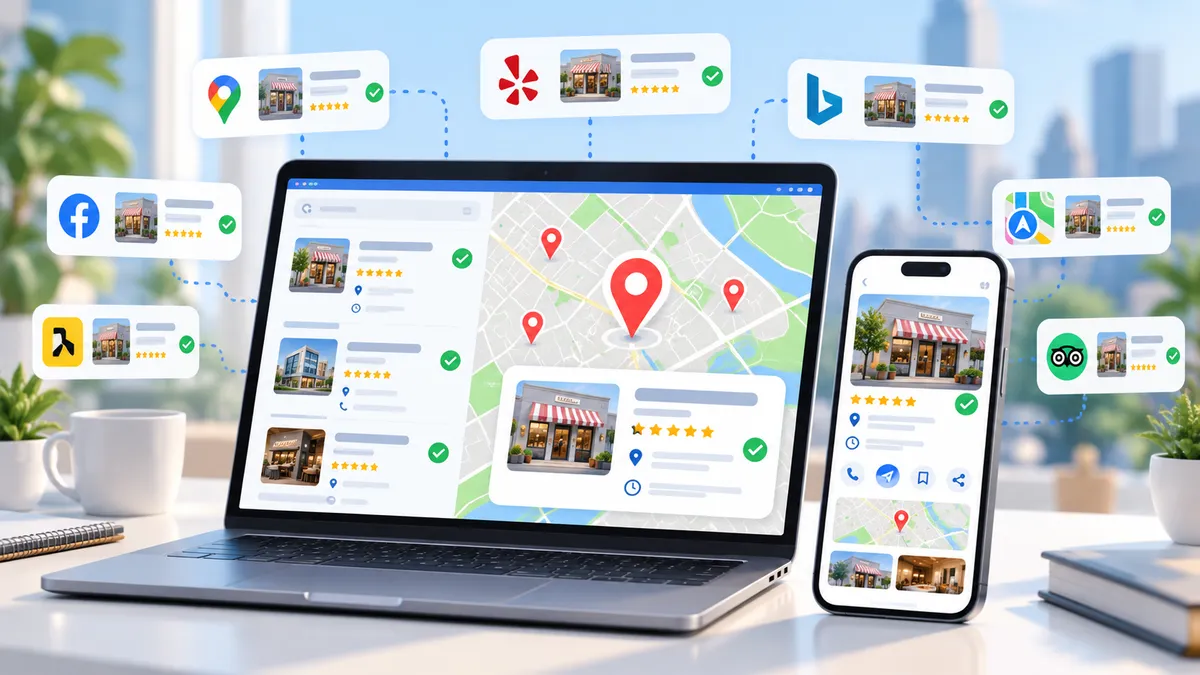
Indiana Local Citations SEO Explained | Sunrise To Noon
Do Local Citations Still Matter for SEO in 2026?
Quick Answer: Yes, local citations still matter for SEO in 2026, but businesses don't need hundreds of directory listings. Local citations are mentions of your business name, address, and phone number on other websites. They help customers find accurate information and can support your local online presence. The best approach is to focus on trusted directories, fix outdated listings, and choose websites that are relevant to your business. Having accurate information in the right places is more useful than paying for hundreds of unnecessary listings.
What Are Local Citations in SEO?
Local citations are online mentions of your business information. They usually include your business name, address, and phone number, commonly called NAP.
You can find citations on Yelp, the Better Business Bureau, local chambers of commerce, and industry directories. Some citations also include your website, business hours, and services.
For example, an HVAC company in Muncie, Indiana, might have listings on Yelp and a local business association website. These give customers additional ways to find the company and contact it.
Local citations are one part of local SEO, which helps businesses become more visible to people searching for services in their area.
Do Local Citations Still Help Google Rankings?
Local citations can support your business's online presence, but they don't guarantee higher Google rankings.
Google mainly considers three factors when ranking local businesses: relevance, distance, and prominence. These describe how closely your business matches a search, how close it is to the customer, and how well-known it is.
Google also recommends keeping your business information complete and accurate. However, it doesn't publish a required number of citations or promise better rankings for submitting your business to more directories.
That means citation work should focus on helping customers find reliable information, not simply increasing your listing count.
Local Citation Myths vs. Reality in 2026
Some older SEO advice still encourages businesses to submit their information to hundreds of directories. Here are three common misconceptions worth clearing up.
Myth 1: More Citations Always Mean Better Rankings
Having 200 listings doesn't automatically make your business rank higher than a competitor with 30. Many directories receive little traffic or have no connection to your services.
Reality: A smaller group of useful, accurate listings is a better starting point than hundreds of unrelated submissions. A roofing contractor, for example, may benefit more from a recognized contractor directory than dozens of general listing websites.
Myth 2: Every Listing Must Match Exactly
Your business name, phone number, address, and website should be correct across important platforms. However, small differences such as "Street" versus "St." usually aren't a major problem.
An incorrect phone number or outdated address deserves more attention because it can prevent customers from reaching you.
Reality: Fix meaningful errors before spending time on harmless formatting differences.
Myth 3: Citations Can Replace Google Business Profile Optimization
Directory listings can help customers find your company, but they don't replace your Google Business Profile or website.
Your Google Business Profile displays important details directly on Google Search and Maps, while your website explains your services in greater detail.
Reality: Accurate listings support your local online presence, but they work best alongside a well-managed Google Business Profile and a helpful website.
Which Business Directories Should You Prioritize?
Not every directory is worth the same amount of time or money. Start with platforms customers use, then consider websites relevant to your industry and location.
Priority | Listing type | Examples | What to do |
|---|---|---|---|
High | Major search and map platforms | Google Business Profile, Apple Maps, Bing Places | Claim or manage listings and correct important details |
High | Existing listings with serious errors | Any directory showing an old address or wrong phone number | Correct information customers may rely on |
Medium | Industry directories | Contractor, legal, or professional associations | Add or update listings relevant to your services |
Medium | Local business organizations | Chambers of commerce and local associations | Consider listings that reach your target customers |
Lower | Unrelated or rarely used directories | General listing sites with little relevance | Avoid paying for listings without a clear benefit |
This is a general priority guide, not a fixed ranking of every directory. A website that matters to one industry may have little value for another.
For example, an Indiana home inspector may benefit from a professional inspection directory, while a restaurant may find customer review and dining platforms more useful.
Before paying for a listing, consider whether the website is trustworthy, relevant to your business, and likely to be useful to customers.
Can Incorrect Business Listings Hurt Local SEO?
Incorrect listings can confuse customers and make your business harder to contact.
If your Google Business Profile shows your current phone number but another directory shows an old one, customers may call the wrong number. An outdated address can cause similar problems.
These mistakes should be corrected, especially on major platforms. However, one incorrect listing doesn't automatically mean your Google rankings will drop.
What About Duplicate Business Listings?
A duplicate listing happens when the same business has more than one listing on a platform.
For example, a contractor may have one listing under its current name and another under a previous business name. Both might display different contact information.
Before requesting removal, check whether the listings represent the same business and whether either contains important information, such as customer reviews.
Some platforms allow businesses to claim, update, merge, or report duplicates. The right action depends on the platform's rules.
What If Your Business Doesn't Have a Public Office?
Some companies travel to customers instead of welcoming them at a storefront.
For example, a plumber serving Muncie and Delaware County may operate from a private address without receiving customers there.
Google requires service-area businesses that don't serve customers at their address to hide that address on their Business Profile. Other directories may have different requirements.
Keep your business information accurate while following each platform's rules. Don't publish a private address just to create more citations.
How to Audit Your Local Business Citations
A citation audit helps you find where your business appears online, identify incorrect information, and decide which listings need attention.
Step 1: Confirm Your Current Business Information
Start with your correct business name, phone number, website, and address when applicable. Make sure these details reflect how your business currently operates.
Step 2: Find Existing Listings
Search Google for your business name, phone number, and any previous business details.
Look for outdated addresses, disconnected phone numbers, duplicate listings, and incorrect website links. Pay particular attention to major platforms and directories customers may use.
Step 3: Prioritize Important Corrections
Fix errors that could prevent customers from contacting you or finding your business.
Start with major platforms, then move to relevant industry and local directories. If a listing can't be edited directly, look for an option to claim it or request a correction.
Step 4: Add Useful Missing Listings
Once important errors are corrected, look for directories where your business should appear.
Choose established websites related to your services or location rather than submitting your information to every directory available.
Step 5: Check That Changes Were Published
Submitting a correction doesn't always mean the information changes immediately.
Revisit important listings to confirm the updates were accepted. Review them again whenever your business moves, changes names, or updates its contact information.
Example: How Citation Cleanup Works After a Business Moves
Imagine an Indiana roofing company moves to a new location.
Its website and Google Business Profile show the correct address, but Yelp, a local business directory, and an older contractor listing still display the previous location.
Instead of purchasing another 50 citations, the company should first identify the outdated listings and correct the ones customers are most likely to use.
Next, it should check for duplicate listings created under the old address. Depending on the platform, those listings may need to be updated, merged, or reported.
Finally, the company should confirm that the corrected details appear publicly.
This approach solves an actual customer information problem rather than creating more listings that may not be needed.
This is a hypothetical example, not a Sunrise To Noon client case study.
Do Local Citations Matter for AI Search?
Accurate business information can also be useful when customers research local companies through AI-powered search tools.
Some AI systems may encounter information from business directories, websites, and other online sources. If those sources display conflicting business details, customers may receive confusing or outdated information.
However, there is no established citation count or directory strategy that guarantees your business will appear in AI-generated answers.
Rather than buying listings specifically for AI visibility, focus on maintaining accurate information on your website, Google Business Profile, and important third-party platforms.
When Is Professional Citation Cleanup Worth It?
Some citation problems are easy to fix yourself. If you have three or four outdated listings and can access them, you may be able to make the corrections without hiring an agency.
Professional help becomes more useful when your business has many inconsistent listings, duplicate records, previous addresses, or information that keeps reappearing after corrections.
For example, a company that recently changed names may need to review listings under both its old and new identities. Some incorrect details may also be coming from business data providers that share information with other platforms.
A professional review can help identify where the problems are coming from, which listings deserve attention first, and which corrections require additional follow-up.
However, if your important citations are already accurate, improving your website or Google Business Profile may be a better use of your SEO budget.
Keep Your Business Listings Accurate With Sunrise To Noon
Local citations still matter in 2026, but the goal isn't to collect hundreds of listings. It's to make sure customers can find correct information about your company on the websites that matter.
Sunrise To Noon helps Indiana businesses review their local online presence and identify issues that may affect how customers find them.
Through our local SEO and Google Business Profile optimization services, we can examine important business listings, identify outdated contact details or possible duplicates, and recommend which corrections should come first.
Request a Business Listing Consistency Review to find out whether citation cleanup is worth your investment and where your business should focus next.
Contact Sunrise To Noon to get started.

Marketing Strategies
Coming soon.


Our Structure
Marketing Department
Coming soon.
- Website Analysis
- Website Analysis
- Website Analysis


Executive Team

Harold Punzal
Owner & CEO
Products

Context Ads
Coming Soon
READ MORE

Target Ads
Coming Soon
READ MORE

Web Analytics
Coming Soon
READ MORE

Data Analysis
Coming Soon
READ MORE

Link Building
Coming Soon
READ MORE

Media Promotion
Coming Soon
READ MORE
Latest Updates

Great team
Coming Soon
READ MORE

Amazing Support
Coming Soon
READ MORE

New Team
Coming Soon
READ MORE
Copyright 2021 SUNRISE TO NOON LLC
All Rights Reserved. Privacy Policy
Copyright 2021 SUNRISE TO NOON LLC
All Rights Reserved. Privacy Policy